

Multi-color 3D printing has moved beyond decorative prototypes and novelty models. For engineering teams, using different colors within a single printed part can make prototypes easier to interpret, improve communication between departments, and help teams evaluate complex assemblies before moving to more expensive manufacturing methods. The best multi-color 3D prints are therefore not simply the most visually detailed. They are prints that use color for a practical engineering purpose.
From functional prototypes and assembly demonstrations to educational models and product development, multi-color printing can support several stages of the engineering process. Understanding where it provides real value can help teams choose the right printing approach and avoid adding complexity without a clear benefit.
How multi-color 3D Printing Supports Engineering Projects
Engineering prototypes often contain multiple components, functional areas, or internal structures. When every feature is printed in the same material and color, it can be difficult to distinguish individual sections quickly. Multi-color 3D printing provides a simple visual reference that can make these differences easier to understand.
For example, an engineering team developing a mechanical assembly could use different colors to distinguish moving components, structural elements, connectors, and protective covers. The printed model can then communicate the design more clearly during reviews without relying entirely on CAD software or technical drawings.
Color can also provide visual information without changing the physical geometry of a component. This makes it particularly useful when teams need to explain a design to people who are not directly involved in the modeling or engineering process.
What Are the Best multi-color 3D Prints for Prototyping?
Product prototyping is one of the most practical applications for multi-color 3D printing. A prototype can represent different materials, functional zones, or components through carefully selected colors, allowing engineers to assess the overall concept more effectively.
Consumer products, electronic housings, automotive components, and industrial equipment can all benefit from this approach. A housing prototype, for instance, might use one color for the main enclosure and another for buttons, interfaces, or removable components. This can make ergonomic and visual evaluations easier during early development.
The value is particularly clear when prototypes are reviewed by multiple teams. Designers can focus on appearance and user interaction, while engineers can examine fit, component relationships, and assembly requirements using the same physical model.
Using Color to Explain Complex Assemblies
Some engineering designs are difficult to understand from a finished external shape alone. Internal channels, structural supports, fluid paths, wiring routes, and mechanical interfaces may be hidden inside the final product.
Multi-color printing can help reveal these relationships by assigning different colors to separate functional areas. A cross section or educational model can show one color for an internal flow path and another for the surrounding structure, making the relationship between the elements easier to interpret.
This approach is useful for design reviews, technical presentations, training, and maintenance documentation. Instead of explaining every feature verbally, an engineering team can use a physical model as a visual reference.
Design Validation and Assembly Checks
A multi-color prototype can also support physical design validation. While a printed prototype cannot replace specialized testing for strength, temperature resistance, electrical performance, or other engineering requirements, it can help teams identify physical design issues at an early stage.
For example, engineers can examine whether components fit together as expected, whether access points are easy to reach, and whether an assembly sequence makes sense. Different colors can make individual parts easier to identify during these checks.
This can be especially useful for products with many components. If several parts have similar shapes, assigning distinct colors can reduce confusion during assembly and review. The resulting prototype becomes both a physical model and a visual guide.
Choosing a multi-color 3D Printer for Engineering Use
The right printer depends on the intended application rather than the number of available colors alone. Engineering teams should consider print resolution, build volume, material compatibility, color switching method, printing speed, software workflow, and the complexity of the parts being produced.
For larger prototypes, build volume can be important because it determines whether a model can be produced as one piece or must be divided into sections. For detailed engineering models, dimensional consistency and reliable layer placement may matter more than having a large color library.
The method used to manage multiple materials or colors also affects workflow. A system that can coordinate multiple filaments within one print can reduce the need to manually assemble separately printed colored components. Teams should also consider how easily color assignments can be managed in slicing software.
Where WonderMaker 3D Can Fit Into the Workflow
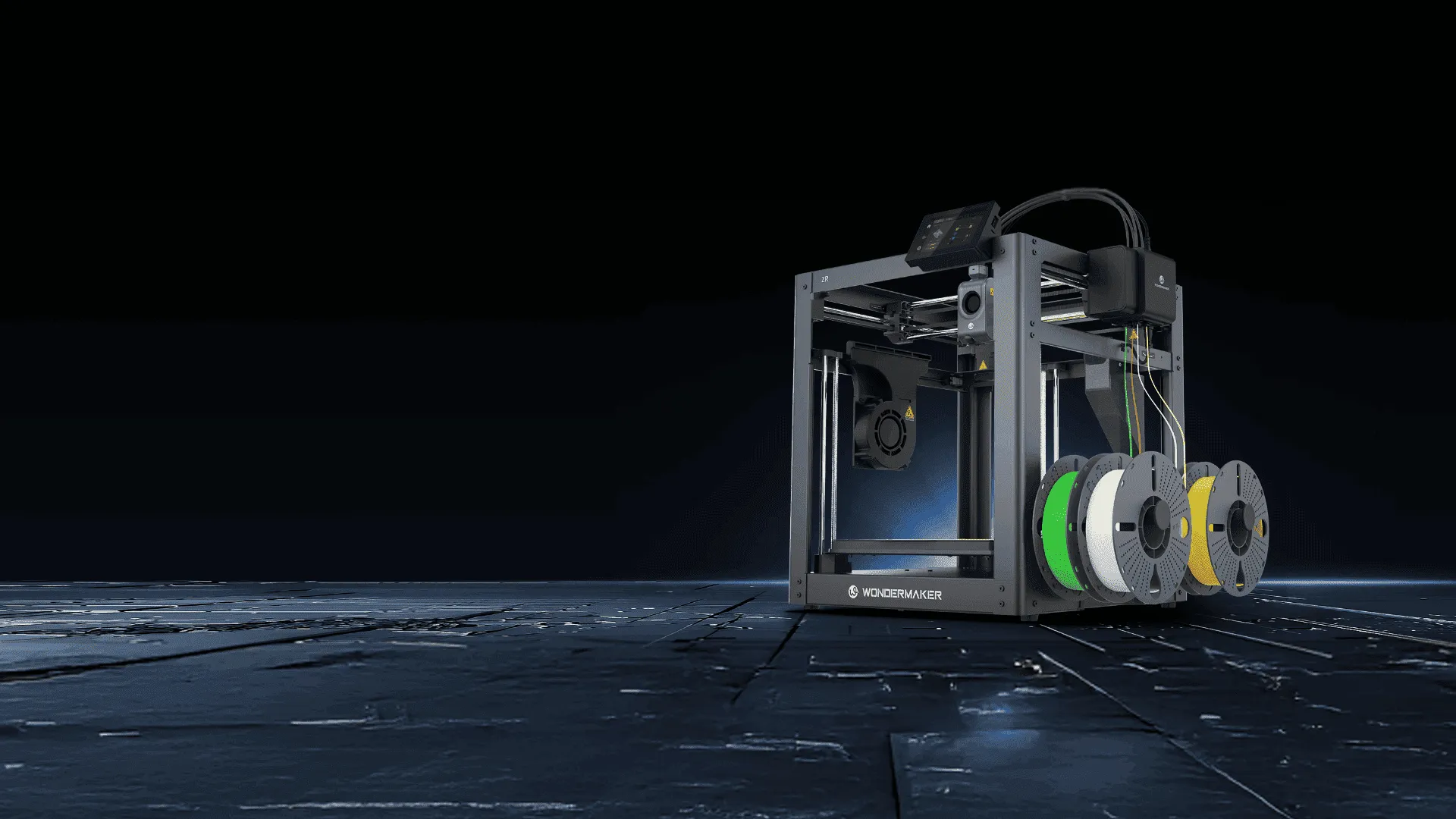
WonderMaker 3D provides multi-color 3D printing solutions that can be considered for applications involving detailed prototypes, product models, and visual engineering demonstrations. Its ZR series is designed around multi-color printing, making it relevant for teams that need color differentiation within a single printed model.
The important consideration is not simply whether a printer can produce multiple colors. Engineering teams should evaluate whether the printer’s capabilities match their typical model size, material requirements, level of detail, and production workflow. A suitable system should support repeatable results while keeping the transition from digital design to physical prototype practical.
Making multi-color Printing More Useful
The most effective use of multi-color 3D printing begins with a clear reason for assigning different colors. Engineers can use color to identify components, highlight functional zones, explain internal structures, or distinguish assembly stages. When color is connected to a specific purpose, it adds useful information rather than simply improving appearance.
Teams should also consider the final purpose of the prototype before selecting materials and printing settings. A visual demonstration model may prioritize color clarity and surface quality, while a functional prototype may place greater emphasis on material properties and dimensional accuracy.
By combining appropriate color organization with a suitable printer and well planned design workflow, engineering teams can turn multi-color prototypes into practical tools for development, communication, and validation. The best multi-color 3D prints are ultimately those that make an engineering task easier to understand, evaluate, or complete.
