

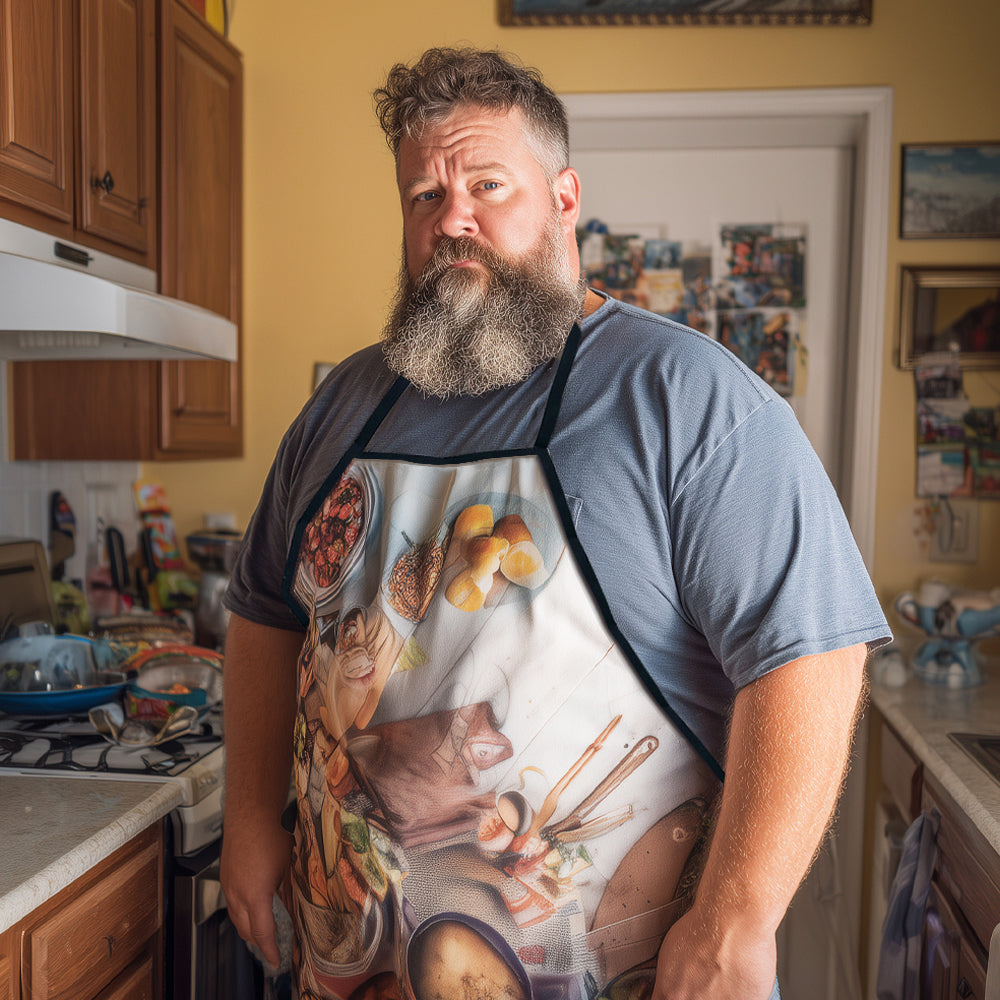
A kitchen apron does more than keep food splashes off clothing. For restaurants, cafés, bakeries, retailers, and growing food brands, it can also support a consistent professional appearance. A custom kitchen apron allows businesses to choose visual details and specifications around a particular use instead of settling for a generic design. Understanding material, printing, fit, quantity, and care requirements makes it easier to select an apron that is practical as well as visually distinctive.
What Makes a Custom Kitchen Apron Different?
A standard apron normally comes in a fixed material, color, and design. A customized version gives buyers more control over details such as colors, artwork, logos, and, depending on the supplier and order, other product specifications.
This flexibility matters when an apron needs to match a restaurant identity, promotional campaign, retail collection, or event theme. Instead of treating the apron as an isolated accessory, businesses can make it part of a broader visual system.
Choosing the Right Apron Material
Buyers should weigh material early in the purchasing process because it affects comfort, appearance, maintenance, and everyday use. Polyester is often selected for lightweight applications, while cotton and canvas can provide different textures and handling characteristics.
The exact fabric specification should always come from the individual product page. For example, the custom kitchen apron listed by Bulijojo specifies either 95% polyester + 5% cotton canvas or 100% polyester canvas. The same page describes the material as washable, lightweight, and breathable, with a sleeveless bib-style design intended for kitchen, bakery, café, garden, and home use.
Matching Printing Methods to Your Design
The printing method should match the complexity of the artwork. Simple logos with limited colors may suit screen printing, while detailed artwork, gradients, or photographic designs generally require a method capable of reproducing finer visual information.
Its apron collection states that digital printing or screen printing can be used, depending on the product and design requirements. In general, digital printing can suit detailed artwork, multiple colors, gradients, and photo designs, while screen printing is often practical for simpler logos and larger bulk orders.
Before production, review artwork dimensions and file quality carefully. The supplier accepts formats including AI, EPS, PSD, TIF, JPG, and PNG, and recommends vector files for better print quality.
Considering Size, Quantity, and Production Time
A good apron is not only attractive; it needs to suit the people who will wear it. Check the listed dimensions, coverage, and intended use before ordering. Custom sizing may involve separate minimum-order requirements, so it should be confirmed during quotation.
For the listed custom kitchen apron, the standard size is 28 × 32.2 inches. The product page states a minimum order quantity of 100 pieces, while larger quantities receive different listed unit prices. It also gives a typical production timeline of 7 to 15 working days after final design approval and deposit payment.
These details are important for businesses planning campaigns, restaurant uniforms, seasonal merchandise, or event orders. Production time can vary with quantity and customization complexity, so confirming the final schedule is essential.
How Should You Design Custom Printed Aprons?
Good apron artwork should remain recognizable at the actual printing size. A logo that looks clear on a monitor may become crowded when placed on a narrow chest area. Consider placement, contrast, color balance, and how the design will look when the apron is worn.
For team uniforms, a shared logo and consistent color palette can create a more coordinated appearance. For promotional products or retail collections, patterns and illustrations may offer more creative freedom.
It is also useful to request a final mock-up before mass production. The product page states that a final design mock-up is sent for written confirmation before production begins, giving buyers an opportunity to review the proposed result first.
When Are Custom Kitchen Aprons Most Useful?
Customized aprons are useful whenever appearance and practical protection need to work together. Restaurants and cafés can use them for staff presentation, bakeries can coordinate them with their brand identity, and event organizers can incorporate them into themed programs.
Custom printed aprons can also work as retail or promotional products. A distinctive apron can become merchandise rather than simply a uniform, especially when its design reflects a recognizable brand or campaign.
The strongest use case is one where customization has a clear purpose. Adding more design elements does not necessarily create more value; the final result should still be comfortable, functional, and appropriate for its environment.
Why Consider Bulijojo for Your Apron Project?
The business model at Bulijojo revolves around low-MOQ custom textiles for small and growing brands. Its apron collection currently includes custom kitchen aprons, work aprons, custom kid kitchen aprons, and custom logo kitchen aprons, alongside a wider range of products such as tea towels, tote bags, blankets, beach towels, beach ponchos, Swedish dishcloths, kitchen sets, beach mats, and garden flags.
For the custom kitchen apron discussed here, the published specifications provide a clear starting point for commercial buyers: reusable construction, customizable pattern and printing, a 28 × 32.2-inch standard size, and a 100-piece MOQ. Buyers should still confirm the final specification, artwork, and production schedule for their individual order.
