

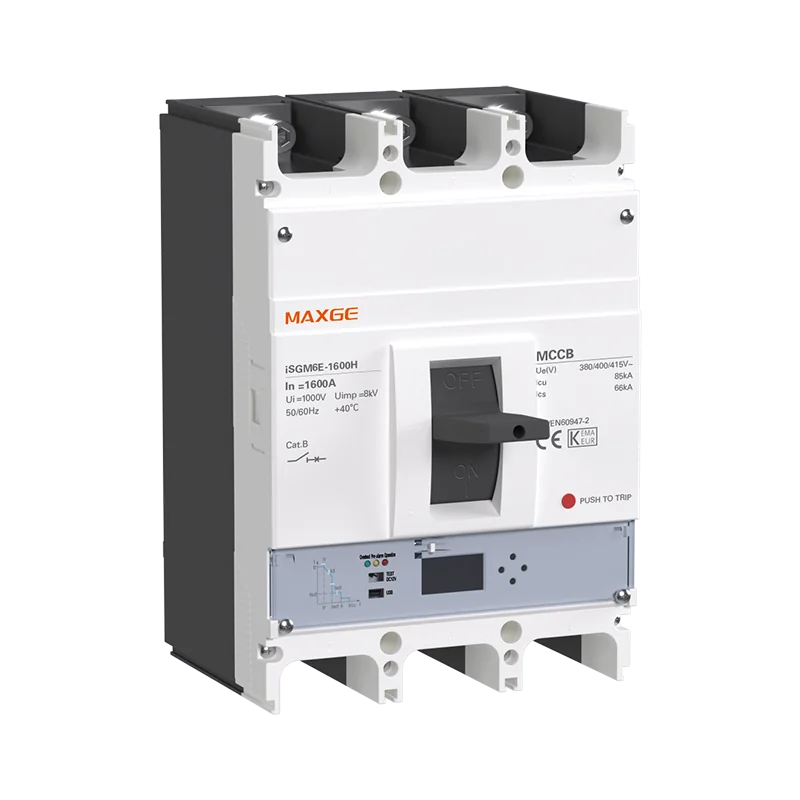
As commercial facilities, manufacturing plants, and infrastructure projects expand, their electrical distribution systems must accommodate higher loads, more circuits, and increasingly complex operating conditions. Choosing suitable electrical control products is therefore an important part of maintaining safe and stable power distribution.
Among these products, the mould case circuit breaker, commonly referred to as an MCCB, is widely used for protecting distribution circuits and electrical equipment. Its ability to handle higher current levels than many terminal protection devices makes it suitable for applications where electrical loads may change as a project develops.
Understanding MCCB functions, ratings, configurations, and available product ranges can help engineers and purchasing teams make more appropriate decisions for both current requirements and future expansion.
Why MCCBs Matter in Larger Electrical Systems
An MCCB is designed to protect electrical circuits from conditions such as overload and short circuit. In commercial and industrial environments, these protection requirements can be more demanding because distribution systems often supply motors, machinery, HVAC equipment, lighting systems, and other substantial loads.
A properly selected MCCB provides a controlled means of disconnecting a circuit when abnormal current conditions occur. This can help limit equipment damage and reduce the risk of extended electrical interruptions.
MCCBs can also serve as important protection points between different levels of a distribution system. For example, they may be installed in main distribution panels, sub-distribution boards, or equipment supply circuits, depending on the system design.
Understanding the Types of MCCB in Electrical Applications
When reviewing the types of MCCB in electrical systems, users should consider more than rated current alone. Different applications may require different operating mechanisms, trip characteristics, installation configurations, and protection functions.
Fixed-type MCCBs are commonly selected for conventional distribution applications where the breaker remains permanently installed in the panel. Electronic-type MCCBs can provide more advanced protection and monitoring functions, making them suitable for systems where greater control over electrical parameters is required.
Smart MCCBs are another option for modern power distribution. They can support intelligent power management and fault monitoring, which can be useful in facilities where operators need greater visibility into electrical system conditions.
The appropriate configuration depends on the load characteristics, distribution architecture, available installation space, and protection requirements of the project.
MCCB Ratings and What They Mean for System Design
MCCB ratings are among the most important specifications to review before selecting a device. Rated current, breaking capacity, voltage, number of poles, and trip characteristics all influence whether an MCCB is suitable for a particular application.
The rated current should correspond to the expected operating load while remaining coordinated with the conductor and other protective devices. Selecting a breaker simply because its current rating is higher is not always the right approach. Protection must be coordinated with the complete electrical system.
Breaking capacity is also important, particularly in installations where prospective short-circuit current may be high. The MCCB must be capable of safely interrupting the expected fault current under the applicable system conditions.
For this reason, engineers should evaluate MCCB ratings together with system calculations, installation standards, and coordination requirements rather than treating any individual specification in isolation.
Using an MCCB Range List for Easier Product Selection
An MCCB range list can simplify the initial product selection process by allowing users to compare available current ratings, product structures, and functional configurations. A clear range makes it easier to identify a suitable product for different stages of an electrical distribution system.
For example, MAXGE provides a range of moulded case circuit breakers covering different application requirements. Its product portfolio includes fixed-type MCCBs, electronic-type models, and smart moulded case circuit breakers designed for commercial, industrial, and building power supply systems.
Reviewing the range before final specification can also help users consider future system expansion. A project may initially require a certain current rating but later add machinery, production capacity, or additional distribution circuits. Selecting a compatible product family can simplify future planning and maintenance.
What to Consider Before Selecting an MCCB
A practical MCCB selection process should begin with the electrical characteristics of the application. Load current, system voltage, fault level, installation environment, and required protection functions should all be evaluated.
Users should also consider whether the breaker needs fixed or electronic operation, whether monitoring functions are required, and how the MCCB will coordinate with upstream and downstream protective devices.
Documentation is another important consideration. Product specifications, technical data, installation information, and application guidance can help engineers verify that a selected device meets project requirements before procurement and installation.
For projects involving multiple electrical control products, it can also be useful to work with a supplier that provides a broader product portfolio. This can simplify technical communication and make it easier to coordinate MCCBs with other circuit protection and control components.
Selecting Electrical Control Products for Long-Term Applications
Electrical distribution systems are expected to operate reliably over extended periods, so product selection should consider more than immediate installation requirements. Consistent specifications, suitable protection characteristics, technical support, and product availability can all influence the long-term performance of an installation.
MAXGE offers MCCB products as part of a broader electrical product portfolio that also includes MCBs, RCCBs, RCBOs, ACBs, smart breakers, distribution boxes, and industrial devices. This wider range can support different stages and levels of electrical distribution within commercial and industrial projects.
When technical requirements are unclear, direct communication with the manufacturer can also help users confirm product specifications and identify an appropriate configuration.
Building a More Practical Power Distribution Strategy
MCCBs can serve an important role in electrical distribution where higher current capacity, adjustable protection, and flexible installation options are required. Their selection should take into account actual operating conditions, including rated current, voltage, prospective fault current, load characteristics, protection coordination, and potential changes in system demand.
When comparing different types of MCCBs, looking beyond a single rating can provide a more complete basis for product selection. Breaking capacity, trip characteristics, pole configuration, installation requirements, and available accessories may all affect how a device fits into a particular distribution system. A clearly organized product range can also help engineers and procurement teams compare specifications more efficiently.
MAXGE develops and manufactures a broad range of low-voltage electrical products for distribution, protection, and control applications. Its capabilities extend from conventional low-voltage systems to electrical protection requirements in PV, renewable energy, energy storage, and EV charging. With manufacturing bases in Deqing and Wuhu, automated production, dedicated R&D resources, patented technologies, software copyrights, CNAS-related laboratory capabilities, and international certifications, MAXGE supports product development across a range of application requirements.
The company’s MAXGE, EMA, and GEBLER brands serve customers in more than 60 countries, supported by over 80 distribution partners. For MCCB specifications, product selection, or application requirements, you can contact MAXGE through its official website to discuss the appropriate options for your electrical project.
