

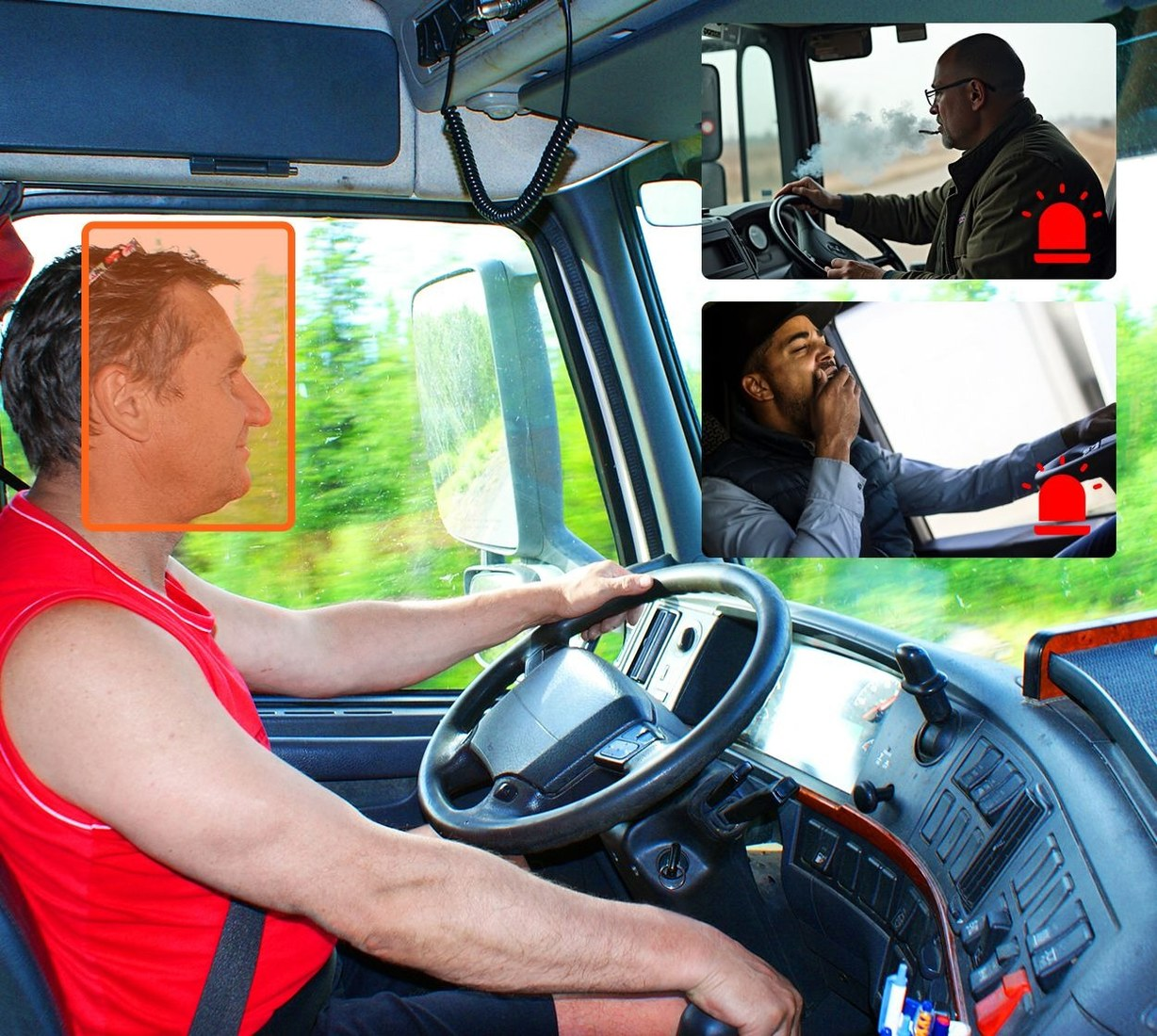
Logistics fleets generate more operational data than most teams can review manually. GPS positions, route changes, driver events, cargo disputes, and video recordings can all be useful, but only when the system helps staff find the events that require attention. A logistics fleet management system with AI video is intended to reduce that gap by connecting machine-detected events with location and visual evidence.
The business value is therefore tied to workflow design. In practice, transportation fleet management solutions should help dispatchers and safety teams move from an alert to a verified event, then to a documented action, without requiring continuous video watching or separate data searches.
Use AI Video to Prioritize Events, Not Create More Footage
AI video is most useful when it narrows the review workload. Driver monitoring can flag fatigue, distraction, or other configured behaviors, while advanced driver-assistance functions can identify road-related risks such as lane departure or forward-collision warnings. Event-triggered recording or upload can then preserve a relevant time window for review instead of treating every minute of footage as equally important.
A logistics operator should define which events justify immediate intervention and which can be reviewed later for coaching. Excessive alerting creates fatigue in the control room and can reduce trust in the system. Thresholds, event severity, vehicle type, route risk, and working conditions should therefore be considered during commissioning, and the rules should be reviewed after real operating data becomes available.
Video evidence also supports claims and cargo-security workflows. When a collision, harsh maneuver, unauthorized stop, or delivery dispute occurs, a time-aligned clip can help supervisors determine what happened. The system should preserve the original event record, control access to footage, and provide enough metadata to locate the correct vehicle and trip quickly.
A logistics operation should also decide how alerts interact with driver coaching. Event counts by themselves can reward or penalize drivers unfairly if route difficulty, traffic density, vehicle type, and exposure hours are ignored. Safety teams can use reviewed video to classify events, identify recurring patterns, and focus coaching on behaviors that can actually be changed.
Combine Route Visibility with Driver and Cargo Context
Location data remains essential because AI events need operational context. Dispatchers can use GPS tracking to monitor route progress, stop duration, geofence entry, and unexpected deviations. When an event is linked to its location and route state, the team can decide whether it reflects a safety problem, traffic condition, customer requirement, or unauthorized activity.
Where the project requires it, a logistics fleet management system may also combine vehicle-health or fuel information. These data sources help the organization move from isolated incident management toward a broader view of utilization and reliability. For example, repeated harsh driving and abnormal fuel consumption may justify a targeted review even if neither signal alone exceeds a critical threshold.
BSJ Technology’s logistics solution combines AI dashcams, GPS trackers, multi-channel MDVR systems, real-time tracking, driver behavior monitoring, vehicle-health monitoring, and video surveillance. For commercial fleet deployments, the evaluation can also cover global technical support, hardware engineering, customization, and the ability to connect with established software ecosystems, including Wialon and GPSGate.
Cargo security introduces another workflow. Geofenced stops, door events, route deviations, and camera footage can be correlated when theft or tampering is suspected. The important design question is how quickly a supervisor can locate the relevant evidence and whether the event record is retained long enough for customer, insurer, or internal review.
Integration with transport-management or order systems can add further value when the fleet needs to connect vehicle status with jobs, customers, or delivery windows. The telematics layer does not need to replace those systems; it needs stable identifiers and interfaces so that location and video events can be associated with the correct operational record.
Plan Integration and Device Operations Before Scaling
Scaling a fleet project requires more than purchasing the same device many times. Integrators need a repeatable installation standard, device naming convention, SIM and data plan strategy, configuration profile, remote update process, and escalation path for failures. Without those controls, a technically successful initial deployment can become difficult to maintain when expanded across depots or countries.
Existing customer systems also matter, so transportation fleet management solutions should accommodate established platforms and data flows. A distributor or platform provider may want BSJ hardware to feed data into its own application, while an operator may prefer a supplier platform for some functions and a corporate system for others. API or protocol compatibility, event definitions, firmware governance, and technical documentation should be assessed before commercial rollout.
AI video is therefore best treated as one component of a connected logistics architecture. GPS establishes where the vehicle is, AI helps identify relevant risk events, video explains their context, and management software turns the information into action. The well-structured commercial fleet deployment links those functions to clear operating procedures and a support model that can scale with the fleet.
Procurement should examine BSJ Technology across that full operational chain. A structured validation run can measure AI event precision, video retrieval time, GPS continuity, network consumption, remote configuration, and API behavior. Those results give fleet operators and solution providers a stronger basis for commercial scaling than relying only on laboratory specifications or a one-time demonstration.
Commercial scaling also depends on installation repeatability. A logistics buyer can document wiring, antenna positions, camera angles, firmware versions, and commissioning tests for each vehicle class. That standard reduces variation between depots and gives technical support a consistent reference when a device behaves differently in the field.
