

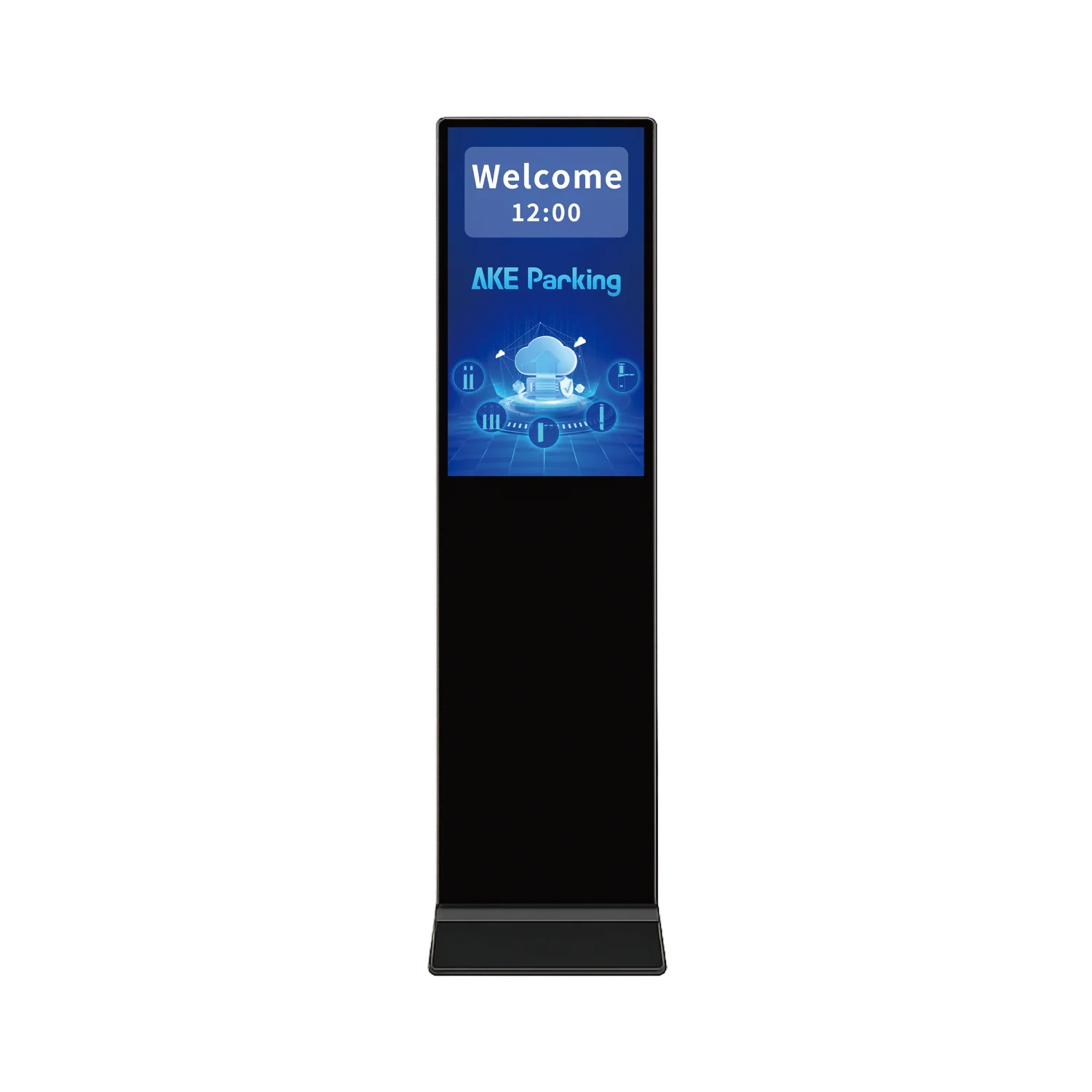
For property developers, facility operators, and system integrators, choosing a vehicle parking management system is rarely a simple hardware purchase — it is an infrastructure decision that affects traffic flow, revenue collection, and tenant satisfaction for years to come. A poorly specified system creates entrance bottlenecks, recognition errors, and costly retrofits, while a well-planned deployment scales smoothly from a single-lane office building to a multi-site commercial portfolio. Before requesting quotes, procurement teams should map their site’s vehicle volume, lane count, weather exposure, and integration requirements (payment platforms, access control, or existing security systems). This groundwork determines which hardware tier — entry-level, mid-range, or industrial-grade — actually fits the project, rather than defaulting to whichever spec sheet looks most impressive on paper.
Core Components: What a Complete System Actually Includes
A modern parking management deployment is built from several interdependent product categories, not a single device. At the entrance and exit lanes, license plate recognition (LPR) controllers handle vehicle identification, while automatic barrier gates manage physical access. Supporting these are payment kiosks, intercom or help-point terminals for driver assistance, and — for larger facilities — parking guidance systems that direct drivers to open spaces in real time. Understanding how these pieces interact is essential when evaluating car park management system suppliers, because a vendor that only manufactures barriers, or only sells guidance sensors, will require you to integrate multiple brands with varying protocols and support timelines. Sourcing from a manufacturer that engineers the full stack — recognition hardware, barrier control, payment, and guidance — reduces integration risk considerably.
LPR Controllers: The Recognition Layer
The LPR controller is the functional core of any lane, and specifications here matter more than buyers often assume. As an example of current-generation hardware, AKE’s Pro LPR Controller uses a built-in 5-megapixel HD camera rated for ≥99.9% all-weather recognition accuracy, including support for Guangdong–Hong Kong–Macao cross-border plate formats, and reliable capture of vehicles moving under 20 km/h — a realistic speed range for entrance lanes. The unit pairs a 12.1-inch full-color LCD for QR codes and driver messaging with an industrial-grade ARM processing platform, up to four network ports for stable connectivity, and IP54 environmental protection with a defogging fan and heated anti-fog glass. These details illustrate what buyers should be checking on any spec sheet: recognition rate under real-world speed and lighting conditions, ingress protection rating, and networking capacity for multi-lane deployments — not just camera megapixels in isolation.
Barrier Gates: The Physical Access Layer
Barrier gate selection depends heavily on traffic frequency and climate. High-throughput sites — logistics parks, commercial garages, transport hubs — need hardware engineered for continuous cycling rather than residential-grade actuators. AKE’s High-Speed Barrier Gate, for instance, runs on a 24V DC brushless motor with planetary gear transmission, offers 1–6 second adjustable opening and closing speed, and is rated for a 5-million-cycle service life with an operating range of -40°C to +85°C. Safety features such as loop anti-smashing detection, infrared or pressure-wave sensing, and fire-alarm linkage are standard considerations for any facility open to public vehicle traffic. When comparing quotes, ask suppliers to confirm cycle-life ratings and IP protection class in writing — these two figures alone often separate industrial-grade equipment from consumer-grade substitutes marketed at a lower price point.
Evaluating Suppliers: Beyond the Price Quote
Hardware specifications are only part of the decision. For OEM/ODM partners, system integrators, and multi-site operators, supplier evaluation should also cover manufacturing scale, quality traceability, and export experience. AKE Parking was founded in 1997 as the first company to develop and introduce a parking guidance system in China, and has since implemented more than 240 overseas parking guidance projects and over 12,000 global deployments in total. The company operates as a national high-tech enterprise recognized as a “Little Giant” specialized enterprise, holds 54 software copyrights, and has been a member of the International Parking Institute since 2012 — credentials worth verifying with any prospective car park management system suppliers, since project history and third-party recognition are harder to fabricate than a product catalog.
Product breadth is another differentiator. Beyond LPR controllers and barrier gates, AKE’s parking and mobility line spans automatic pay stations, video and voice help-point terminals, curbside management tools, and both ultrasonic and camera-based parking guidance systems for indoor and outdoor space detection — meaning a single vendor can typically cover an entire site’s parking and access requirements rather than forcing buyers to bridge multiple suppliers. This matters practically: unified hardware from one manufacturer usually means consistent firmware, a single point of technical support, and simpler warranty administration across a multi-lane or multi-site rollout.
Making the Final Decision: A Practical Checklist
Before signing a purchase order, procurement teams should confirm five things with any shortlisted vendor: documented recognition accuracy under realistic vehicle speeds, IP-rated environmental protection matching your climate, confirmed cycle-life or duty-cycle ratings for moving parts, integration compatibility with existing payment or access platforms, and a verifiable project reference list of comparable scale. A vehicle parking management system is a long-term operational asset, and the manufacturers who can produce hard specification numbers — rather than marketing language — are generally the ones prepared to support a deployment through years of daily use. For businesses evaluating suppliers with a full parking and access control portfolio, reviewing a manufacturer’s documented project history at AKE parking alongside detailed product spec sheets is a reasonable starting point for building a shortlist grounded in verifiable engineering data rather than promotional claims alone.
