

Carrying heavy loads over extended periods places substantial stress on the human musculoskeletal framework, making shoulder strap padding a critical engineering component. Industrial designers continually experiment with polymer materials to determine how structural cushioning can absorb impact energy and reduce pressure points. Modern backpack manufacturing relies on precise material science to select foams that maintain elasticity and resist permanent deformation under continuous compression.
Understanding the different properties of polyurethane and ethylene-vinyl acetate foams, as well as viscoelastic memory foam, helps designers select suitable cushioning materials for everyday bags. Brands partnering with a specialized custom backpack manufacturer evaluate these polymer options carefully to optimize user comfort during long-term travel.
Molecular Characteristics and Density Properties of Polyurethane Foam
Many flexible polyurethane foams have open-cell structures that can allow greater air movement than closed-cell foams, depending on their formulation and construction. This breathability prevents excessive heat accumulation and moisture buildup against the wearer’s collarbone during warm weather commutes. Softness and flexibility define this material, providing a plush tactile sensation that molds gently to individual body contours. However, open-cell architectures generally offer lower tensile strength, meaning they compress more rapidly under heavy, sustained load conditions.
Engineers frequently combine polyurethane layers with denser structural substrates to achieve a balanced blend of immediate comfort and long-term support. Advanced backpack manufacturing facilities utilize automated cutting machinery to shape these soft cushioning pads with high dimensional accuracy. Technical designers may specify polyurethane inserts for urban daypacks where cushioning comfort is prioritised over high-load support. Collaborating with an experienced custom backpack manufacturer allows developers to test various foam firmness ratings for specific demographic requirements.
Performance and Resilience of Ethylene-Vinyl Acetate Foam
Ethylene-vinyl acetate, commonly known as EVA, is a polymer foam widely used for cushioning because of its resilience and ability to absorb and distribute mechanical loads. Closed-cell structures prevent moisture absorption, making EVA highly resistant to sweat, rain, and environmental humidity degradation over time. This material possesses a firmer tactile response that distributes heavy loads across a wider surface area without bottoming out under pressure. Mountaineering packs and tactical gear rely heavily on EVA padding to protect shoulders from sharp internal contents.
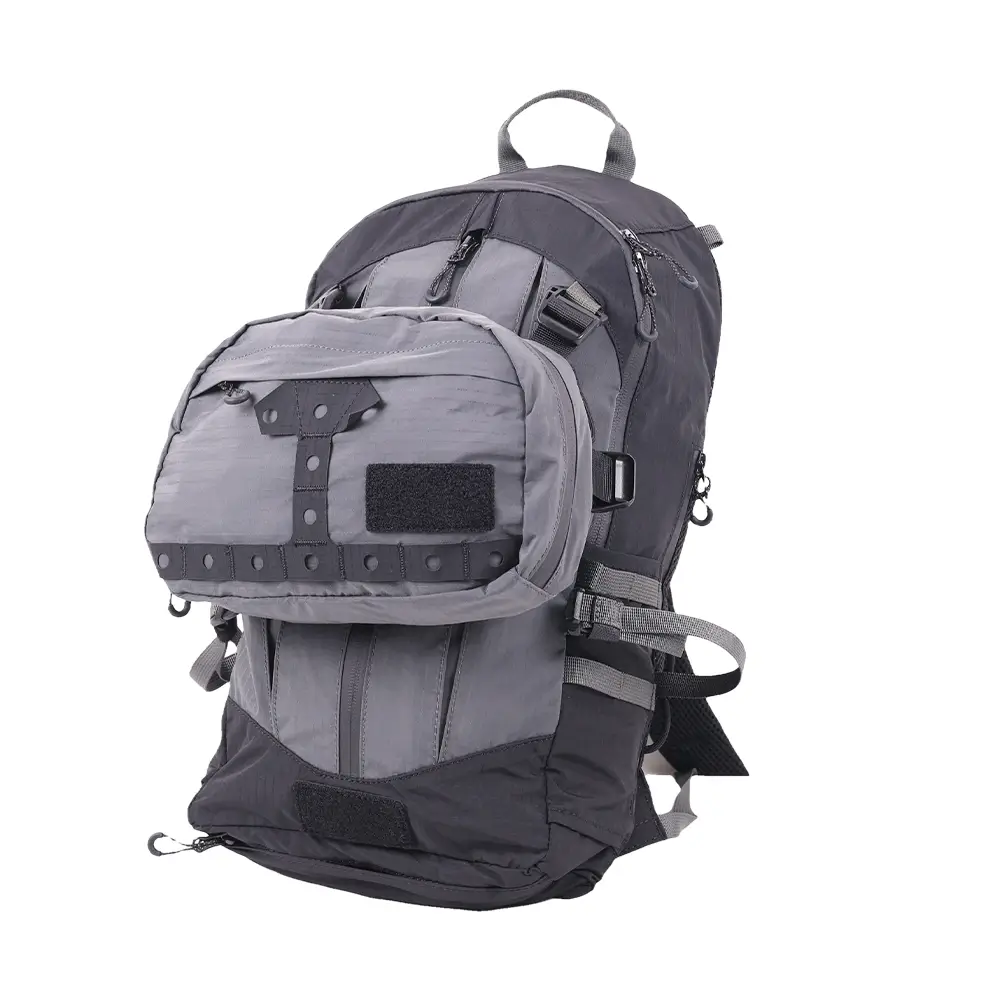
Fabricating molded EVA components requires specialized thermal compression molds that shape the polymer under intense heat and pressure. Specialized backpack manufacturing protocols ensure that the molded foam retains its structural memory and cushioning profile after years of folding. Industry professionals frequently consult a skilled custom backpack manufacturer to prototype ergonomic shoulder curves using high-density EVA sheets. The ChangRong transformable modular men’s backpack integrates durable cushioning solutions designed to withstand rigorous outdoor environments.
The Viscoelastic Behaviour of Polyurethane Memory Foam
Memory foam, scientifically classified as viscoelastic polyurethane, reacts to body heat and pressure by slowly contouring to unique shapes. Its viscoelastic response can conform gradually to the body and help distribute contact pressure across the padded area. The gradual recovery rate prevents sudden pressure spikes when the wearer adjusts posture or twists during active transit. Consequently, memory foam may be considered for travel accessories where soft, conforming shoulder cushioning is a priority.
Despite its plush ergonomics, standard memory foam can retain body heat and lose supportive firmness in hot, humid atmospheric conditions. Material scientists modify polymer formulas to enhance thermal stability and prevent the foam from becoming overly soft during summer months. Modern backpack manufacturing techniques involve laminating memory foam over supportive base layers to combine softness with structural rigidity. Emerging collections featuring the ChangRong practicalism style men’s travel rucksack highlight how hybrid cushioning elevates user satisfaction.
Comparative Compression Recovery and Durability Metrics
Evaluating long-term durability involves measuring how much a foam cushion thins out after thousands of continuous compression cycles. Closed-cell EVA exhibits minimal height loss over years of heavy daily use, whereas soft polyurethane may flatten progressively. Viscoelastic variants fall into a middle tier, requiring supportive backing layers to prevent premature structural breakdown under heavy loads. Accelerated laboratory testing can subject foam samples to repeated compression cycles to evaluate changes in thickness, resilience, and recovery over time.
Maintaining consistent cushioning resilience protects brand reputation and reduces consumer complaints regarding strap discomfort over time. Precision engineering within a professional custom backpack manufacturer environment ensures that foam thickness tolerances remain strictly controlled during bulk fabrication. Brands focusing on high-cost performance select materials based on empirical compression data rather than subjective tactile impressions. Such material screening can help manufacturers maintain more consistent cushioning and ergonomic performance during the intended service life.
Ergonomic Integration and Thermal Regulation in Straps
Padding density represents only one factor in harness design; effective thermal management and strap geometry dictate overall wearability. Grooved channels and mesh overlays carved into foam surfaces promote continuous air circulation, reducing perspiration accumulation during active movement. Appropriate strap width, curvature, and adjustment can help position the cushioning over the shoulder while reducing pressure near the neck. Integrating these ergonomic principles transforms basic fabric straps into sophisticated load-management systems.
Product developers analyze user feedback and biomechanical studies to refine strap width, length, and curvature during the prototyping stage. A reliable custom backpack manufacturer employs computer-aided design software to simulate pressure distribution across diverse body shapes and sizes. Attention to these fine manufacturing details distinguishes professional-grade gear from standard mass-market retail alternatives. Collaborative prototyping workflows enable brands to introduce innovative comfort features quickly to competitive regional markets.
Conclusion
Choosing the right foam for shoulder straps is never about a single “best” material—it is about matching polymer properties to real‑world use cases. PU delivers plush initial comfort, EVA guarantees long‑term resilience against repeated compression, and memory foam offers adaptive contouring for delicate loads. Yet true ergonomic excellence lies in how these materials are layered, shaped, and ventilated within each harness design. Manufacturers like ChangRong bridge material science with biomechanical testing, turning lab‑verified data into everyday carrying ease—securing that every strap, whether for urban commutes or mountain treks, supports both the load and the wearer, mile after mile.
