

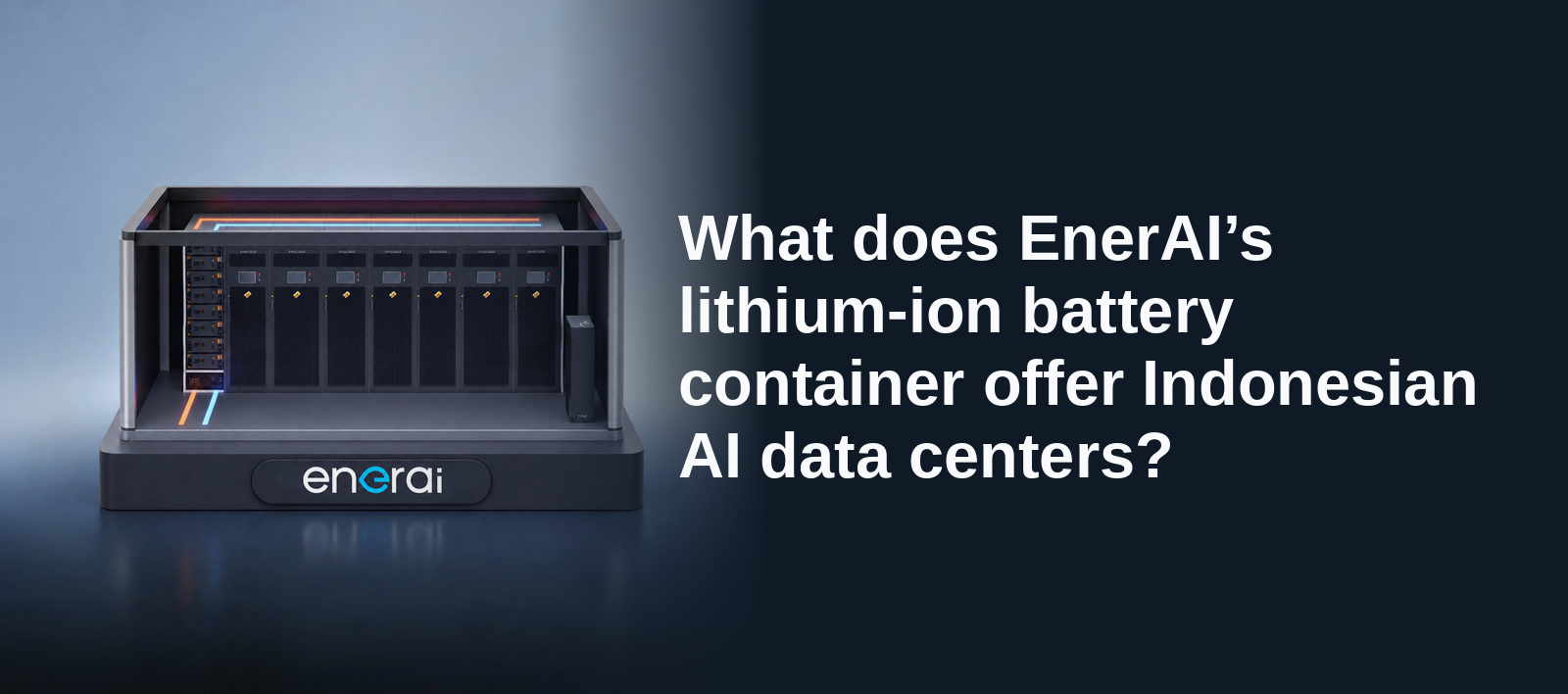
A data center in Indonesia can specify backup batteries as a factory-integrated package and connect that package to the wider power system at the site. The Lithium-Ion Battery Container from EnerAI combines batteries, electrical distribution, temperature control and fire protection. Published protection features include real-time thermal runaway monitoring and pressure relief. The container sits in the company’s Prefabricated & Backup Power Supply portfolio. Its application in a particular facility depends on the loads it must support, the required runtime, and the arrangements for keeping replacement parts available after handover [1].
The container connects to the site’s UPS or DC backup system
EnerAI places battery backup in the conversion and distribution stage of its AIDC architecture. For a developer, that means specifying the battery with the UPS or DC system that will draw from it. The load schedule should identify which equipment requires backup, how long it must be supported and what source takes over when the battery interval ends. The design also needs to show where control signals cross the container boundary and which equipment sits outside it. Those interfaces determine the scope of integration and acceptance testing.
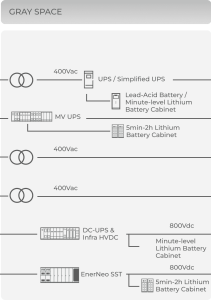
Battery Backup in the Gray Space
EnerAI included battery containers in the products covered by factory prefabrication and pre-delivery testing in its Singapore announcement. A factory test can verify the configured package and the alarms and controls available at its interfaces. Some checks require the customer’s installed UPS, site communications or emergency systems and therefore belong at site acceptance. A test plan with named responsibilities helps the operator see which results travel with the equipment and which must be demonstrated once the container is connected in Indonesia [1].
What determines usable battery capacity at an Indonesian site?
When assessing EnerAI data center power equipment for backup, the first figure to establish is how much load the batteries must carry and for how long. The supplier’s estimate of usable runtime should state the assumed battery condition and operating environment. A project planned in stages also needs to know how future capacity will be added, whether inside the first container or in a separate unit. That decision can affect feeder and control connections, the layout and what needs to be retested for the next expansion.
The product literature describes multiple layers of electrical protection, thermal runaway monitoring, firefighting and pressure relief. In an actual offer, the submittal should show the configuration of those systems and how they connect to the facility’s monitoring and emergency equipment. For instance, the site operator needs to know which alarms will be visible outside the container and which contractor supplies the part of the interface on the building side. Drawings and test records allow the project’s engineering and compliance teams to review those details together.
Usable battery energy depends on the load and operating conditions
Comparable bids use the same protected-load schedule and the same point at which another source takes over. Battery nameplate energy and energy deliverable at the agreed operating point describe different aspects of the package. The offer should state the deliverable figure and the conditions used to establish it. Where different teams supply the container and UPS, the project scope should also identify who verifies that they operate together at the proposed settings. That evidence belongs in the same review as the site layout, protection interfaces and written service terms.
A multi-container project also benefits from service records tied to the individual units. If a later order uses a different battery configuration, the maintenance provider needs to identify the parts list and test documentation that apply to each installed container. A site-level inventory can record the applicable equipment and warranty terms without assuming every container is interchangeable.
Spare-parts availability shapes the long-term support plan
EnerAI’s service materials describe preventive maintenance, emergency support, spare parts and training at a company level. The commitments that matter to an Indonesian facility are more specific. They include the stocking location for critical parts, the response time for an on-site technician and which replacements local staff can perform under warranty. If remote diagnostics are part of the proposal, the support plan can also name who receives alerts, who determines which spares are needed and who authorizes dispatch. Those details affect how soon the system can return to its specified backup capacity.
The same criteria can be applied to other data center power systems bids. A proposal with a lower purchase price may have a longer parts lead time or a different commissioning scope. The commercial comparison is clearer when each offer identifies the supported load, operating assumptions, future expansion work and who will restore the battery system after a fault. The owner can then compare the initial package and the service arrangements against the same operating requirements.
EnerAI’s lithium-ion container gives Indonesian developers a factory-integrated option for modular backup. Its suitability rests on the verified runtime and UPS or DC system interface, as well as the testing and service support included for the site. Together, those items show what the owner is buying and how it will be maintained once the data center is operating. The warranty and parts schedule are worth evaluating with the electrical design because they influence how quickly the installation can recover its intended reserve [1].
Frequently asked questions
Are EnerAI’s lithium-ion battery containers factory tested for data center backup projects?
EnerAI describes its lithium-ion battery containers as factory-prefabricated and tested before delivery. The installed system still needs site checks for its connections to the UPS or DC system, controls and emergency systems.
What spare-parts terms matter for an Indonesian battery container project?
Confirm the parts list for the quoted model, where critical spares will be stocked, who authorizes replacement and how field service is arranged. The proposal should specify which terms apply to the site.
References
[1] EnerAI, “From energy to chip, EnerAI brings full-stack AIDC power solutions to Tech Day Singapore 2026,” PR Newswire, Sept. 30, 2026. Press release.
