

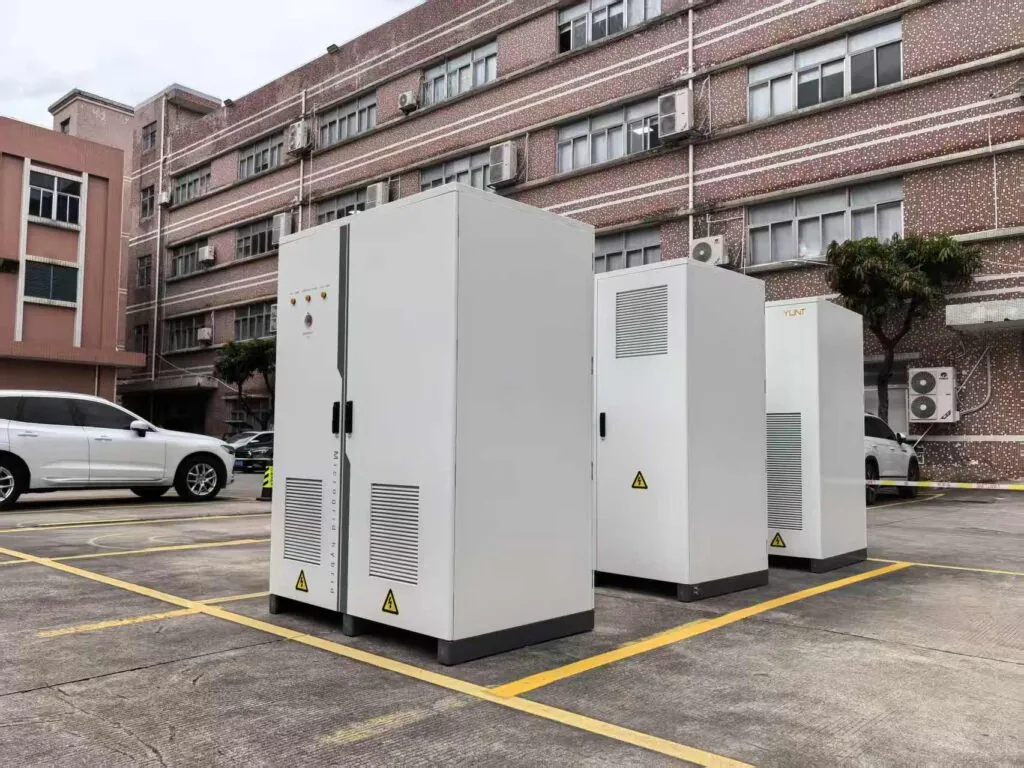
In modern energy storage and power management applications, both traditional inverters and advanced energy conversion technologies play important roles. However, as systems become more complex and require higher flexibility, companies such as YUNT are working with power conversion systems architectures to support evolving grid and storage demands. While traditional inverters were originally designed for relatively fixed conversion tasks, newer system-level solutions are increasingly used in distributed energy, microgrids, and industrial storage environments where adaptability and control precision are important considerations. Understanding the differences between these two approaches helps clarify how energy systems are being redesigned for current industrial requirements.
Functional Scope and System Architecture
Traditional inverters are generally designed to convert direct current (DC) into alternating current (AC) for grid or load use. Their function is often limited to single-direction energy conversion with predefined operating parameters. In contrast, YUNT develops a modular architecture that integrates multiple energy flow directions and control functions within a unified design. This allows the system to manage not only DC-to-AC conversion but also coordination between batteries, renewable sources, and grid interaction. The PCS power conversion system used by them is designed to operate as part of a larger energy ecosystem rather than as an isolated component. This system-based approach enables better compatibility with hybrid energy environments such as microgrids and industrial storage sites where multiple energy inputs must be managed simultaneously.
Control Capability and Application Flexibility
One of the key differences between traditional inverters and newer PCS-based solutions lies in control flexibility. Traditional devices typically operate with fixed control logic and limited adaptability to changing grid conditions. In contrast, YUNT’s system architecture integrates advanced control strategies that allow dynamic adjustment of power flow based on real-time demand and system status. The PCS is also designed to support multi-mode operation, including grid-connected and off-grid scenarios. This makes it suitable for applications such as industrial parks, renewable integration projects, and distributed microgrid systems. Additionally, YUNT’s modular product approach, including PCS cabinets and supporting components, allows system designers to scale capacity more efficiently without redesigning the entire infrastructure.
Integration and System-Level Coordination
Another important distinction is how each solution integrates with broader energy systems. Traditional inverters usually function as standalone units requiring external coordination systems for complex applications. However, YUNT’s architecture is built to operate as a coordinated platform, enabling interaction between energy storage units, renewable generation sources, and load management systems. The PCS supports this integration by providing communication interfaces and modular expansion capability. This reduces the complexity of system deployment and improves compatibility across different energy assets. As a result, system integrators can design more unified energy structures instead of relying on multiple independent devices that require separate control logic.From Standalone Inverters to Integrated Energy Platforms
While traditional inverters focus mainly on basic DC-to-AC conversion, modern solutions such as YUNT’s power conversion system, which extends functionality to system-level energy management. They offer improved flexibility, broader application coverage, and stronger integration capabilities for complex energy environments. Through modular design and coordinated control strategies, they support the development of microgrids, industrial storage systems, and renewable energy projects. This shift highlights how energy conversion technology is moving from single-function devices toward integrated system platforms that better align with evolving energy infrastructure needs.
