

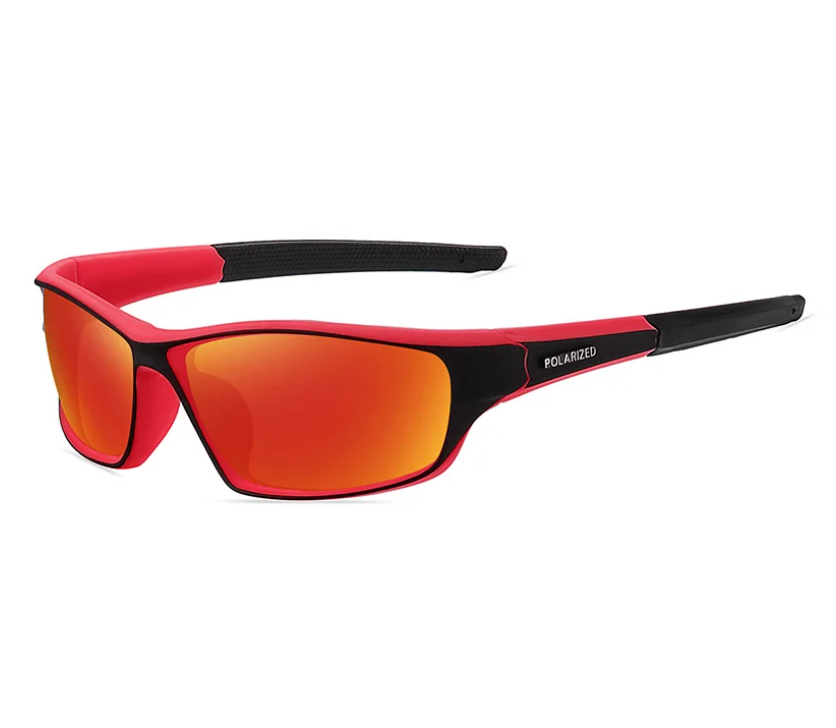
Off-road cycling places demands on eyewear that a smooth road ride never does. Shadows flicker through tree canopy, trail surfaces shift from packed dirt to loose gravel in seconds, and branches whip across the trail at face height. For wholesale buyers sourcing cycling glasses for the off-road segment, the technical considerations go far deeper than tint or style. This examination breaks down the lens technologies, frame engineering, and material choices that separate purpose-built trail glasses from general-purpose sports sunglasses—offering procurement professionals a framework for evaluating products that deliver genuine trail performance.
The Optical Demands of Off-Road Riding
A road cyclist scans for potholes and traffic. A mountain biker processes an entirely different visual stream: the texture of a root section, the angle of a rock slab, the exact line through a dust-covered corner. These split-second judgments depend on lens contrast and clarity.
Trail-specific lenses employ tuned color filtration rather than simple tinting. Shimano’s RIDESCAPE lens series illustrates this approach: their Off-Road-tuned lenses reduce glare from scattered sunbeams filtering through forest canopy and sharpen the visual cues trail surfaces provide—rocks, soil, sand, roots, stumps, and gaps all render with greater distinction. A lens designed for gravel riding does something different, boosting contrast across a range of surfaces to reveal subtle transitions between gravel, dirt, and asphalt. The underlying principle is that reducing specific wavelengths of light makes surface texture more legible, which translates directly to faster reaction times on the bike.
Light transmission is a second critical variable. A trail lens with 35 to 38 percent visible light transmission blocks UV while preserving enough brightness for riding through densely forested sections where light levels swing repeatedly from full sun to deep shade. Too dark a tint, and those shaded sections become dangerously ambiguous.
Frame Materials and Impact Resistance
Off-road riding involves crashes, flying debris, and branches that strike at speed. Frame material selection is a safety calculation. Two materials dominate this category.
Polycarbonate (PC) offers impact resistance roughly ten times that of standard plastic or glass lenses. It is the material most commonly specified in eyewear meeting ANSI Z87.1 impact standards, a benchmark that B2B buyers should look for when evaluating supplier certifications. PC frames are lightweight and cost-efficient at volume, making them a practical foundation for mid-range product lines.
TR90, a high-molecular nylon, brings a different set of properties. It is flexible enough to absorb shock without snapping, retains shape memory after bending, and weighs less than acetate. The material also accepts ventilation channels machined directly into the frame, a feature increasingly common on trail-oriented models. Both TR90 and PC frames are commonly paired with adjustable nose pads and rubberized temple tips, elements that keep the glasses stable when the trail turns rough.
For B2B purchasers, the frame material decision involves balancing cost, durability, and the end-user price point. A product line carrying the label of best cycling glasses in the off-road category typically uses either PC or TR90 as its structural foundation, with metal alloys reserved for premium, lower-volume models.
Lens Technologies That Earn Their Place
Three lens technologies carry genuine functional weight for off-road use, and each has distinct trade-offs that procurement teams should understand.
Photochromic lenses darken and lighten in response to UV exposure. For trail riding, where a single descent can pass through open sunlight, partial canopy, and deep forest, this adaptability eliminates the need to swap lenses mid-ride. The transition speed varies by formulation—higher-quality photochromic lenses adjust in seconds rather than minutes. The limitation is that most photochromic lenses do not darken fully behind a car windshield or in conditions where UV is already partially filtered, which may matter for riders who also drive to the trailhead.
Polarized lenses cut glare by filtering horizontally reflected light—the kind that bounces off water, wet leaves, and glossy rock surfaces. On a trail with stream crossings or after rain, polarization visibly sharpens the terrain. The trade-off is that polarized lenses can make it harder to read certain digital displays and may flatten depth perception on trails where subtle shadow cues help riders gauge surface texture.
Anti-fog coatings, combined with frame ventilation, address a persistent problem in off-road riding. A rider climbing in humid conditions generates heat and moisture that condense on a cold lens surface. Hydrophobic coatings allow moisture to bead and roll off rather than forming a fog layer. When combined with frame ventilation systems—channeled airflow through the upper frame and temples—the lens surface stays clear during sustained effort. Shimano applies hydrophobic coatings on both inner and outer lens surfaces specifically to address this issue.
Ventilation, Fit, and Frame Architecture
Frame ventilation is not an afterthought—it is a primary design element on glasses built for off-road use. The RAM-AIR system found on certain performance goggles maintains constant airflow to reduce fogging and heat buildup during intense riding segments. Other manufacturers approach the problem with open mesh frame designs that maximize air circulation through the frame body itself, or with ventilation openings positioned along the brow line and temple arms.
Fit stability matters equally. A frame that shifts during a rock garden descent distracts the rider and compromises peripheral vision. Adjustable nose pads allow a custom bridge fit; rubberized temple grips prevent the arms from sliding when sweat accumulates. The combination of these features with a wide lens profile gives riders the downward peripheral awareness needed to pick a line through technical trail sections without tilting the head down.
For prescription lens users, the solution often comes in the form of a clip-in RX insert that sits behind the main lens. This preserves the optical performance of the main lens while accommodating vision correction—a feature that expands the addressable market for each frame model.
Certification Benchmarks and Quality Assurance
Supplier claims about impact resistance and UV protection mean little without verifiable standards. Three certifications carry weight in the cycling eyewear market.
CE marking indicates conformity with European health, safety, and environmental standards. FDA registration is required for eyewear sold in the United States. ANSI Z87.1 specifically addresses impact resistance for occupational and educational eye protection—a rigorous standard that involves projectile testing at defined velocities. Products meeting all three certifications provide assurance that frame and lens materials can withstand the debris impacts common in off-road riding.
Physical sample inspection remains the practical complement to certification documentation. A buyer evaluating a wholesale shipment should test hinge durability, verify surface finish consistency across the batch, and confirm that lens coatings perform as specified under real-world conditions. Among factories serving this market, JHEYEWEAR produces cycling glasses with PC and TR90 frames that meet CE, FDA, and ANSI standards, with OEM and ODM options available to business buyers.
What to Weigh When Stocking Off-Road Cycling Glasses
A structured procurement approach to off-road cycling glasses examines several factors in sequence: the lens tuning and tint range that match the end user’s riding environment, the frame material and ventilation design that determine durability and comfort, the lens technologies—photochromic, polarized, or anti-fog—that add functional value, and the certification portfolio that supports the manufacturer’s technical claims.
The term best cycling glasses in the off-road context does not point to a single model. It describes eyewear where the lens optics, frame construction, and fit engineering are coherently designed for the specific visual and physical challenges of trail riding. Procurement professionals who approach supplier evaluation with this framework can build product assortments that serve their customers well across varied trail conditions, light environments, and price expectations.
