

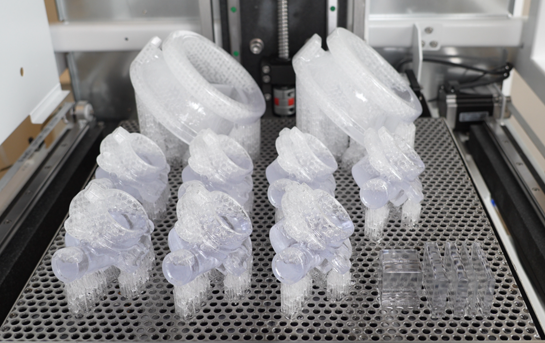
When dealing with large-scale 3D printing, splitting a model into smaller parts is often necessary to ensure a successful print. SoonSer offers powerful solutions for 3D printing, such as their big SLA 3D printer in the Mars Pro Series, which allows users to print larger models with incredible detail and accuracy. However, even with advanced 3D printers, splitting larger prints into smaller, manageable parts remains a common challenge. By properly splitting large models, manufacturers, artists, and 3D printing service providers can improve print quality, reduce material waste, and ensure more efficient production.
Why Splitting Large 3D Prints Is Essential
Splitting large 3D prints into smaller sections is often necessary for several reasons. One of the primary benefits is reducing the print time for each individual part. While SoonSer’s big SLA 3D printers can handle large models, printing very large objects can take extended periods, leading to increased chances of errors or failures. By breaking down the print into smaller parts, the printing process becomes faster, more manageable, and reduces the risk of issues during production. This method also allows users to optimize print quality, as smaller parts are less likely to suffer from warping, layer misalignment, or other issues that can occur with larger prints.
Additionally, splitting large 3D prints is essential for ensuring the structural integrity of the final object. With SoonSer’s large SLA 3D printers, users can achieve highly detailed and precise results, but when it comes to large models, ensuring that each part is correctly oriented and printed can prevent defects like weak points or bending. Splitting the model into smaller sections not only makes it easier to print but also allows users to reinforce each piece, ensuring the final product is sturdy and durable. Moreover, by using the right orientation and supports, users can optimize the printing process for the best quality and finish.
How to Split Large Models for Efficient Printing
When preparing to split a large 3D model, it’s essential to plan how each piece will fit together once printed. Using software like Meshmixer or 3DBuilder, users can easily divide models into smaller segments. The key is to split the model in a way that minimizes the need for excessive post-processing while ensuring each part fits seamlessly together. Depending on the design, the splitting process may include breaking the model along specific lines or using predefined breakpoints that make sense for the overall design. The Mars Pro Series from SoonSer offers high precision, which is critical when aligning these parts later during assembly.
Once the model is divided, it’s essential to optimize the placement and orientation of each part on the print bed. This is where SoonSer’s big SLA 3D printer shines, as the printer’s large print volume allows users to print bigger parts or multiple smaller ones simultaneously. By properly arranging the parts on the print bed, users can maximize space while also minimizing material usage. It’s also important to add appropriate support structures where necessary, especially when working with intricate models. These supports ensure that each part prints correctly and remains stable throughout the process.
How SoonSer’s SLA 3D Printers Improve the Splitting Process
With SoonSer’s big SLA 3D printer, users can easily manage the splitting and printing of large 3D models with enhanced precision. The Mars Pro Series offers a large build volume, which allows users to print larger parts in fewer pieces while maintaining a high level of accuracy. This capability helps businesses, designers, and 3D printing service providers streamline the production process, saving time and effort in both splitting and printing. Moreover, SoonSer’s large SLA 3D printers are equipped with advanced features that make the printing process smoother, including high-resolution printing, automated settings, and easy-to-use software.
The Mars Pro Series is designed to handle complex and large prints, making it ideal for industries like automotive, manufacturing, and product design. When working with larger models, the SLA 3D printing technology ensures that parts are printed with incredible detail and surface finish, even when the models are split into multiple segments. The precision of SoonSer’s big SLA 3D printer means that users can easily align and assemble the parts after printing, resulting in a seamless final product. This is particularly important for high-quality prototypes or custom parts, where every detail matters. With SoonSer, businesses can tackle even the most challenging 3D printing projects with confidence.
Conclusion
Splitting large 3D prints into manageable pieces is a critical step in ensuring the success of the printing process, and SoonSer provides the ideal tools to support this task. By using SoonSer’s big SLA 3D printers, like the Mars Pro Series, businesses and designers can print large models with exceptional precision, regardless of their complexity. Splitting models into smaller sections allows for faster, more efficient printing, while also ensuring the structural integrity and quality of the final product. With advanced features, easy-to-use software, and high-resolution capabilities, SoonSer’s SLA 3D printers make it easier for manufacturers, artists, and 3D printing service providers to manage large prints, improve productivity, and create high-quality results.
