

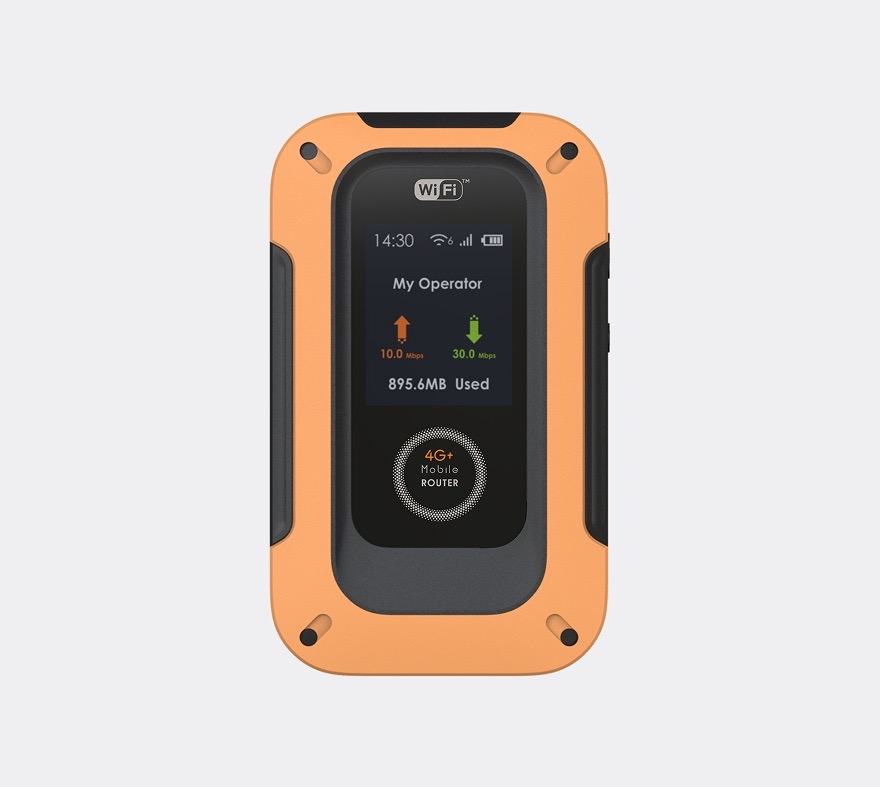
The demand for faster, more reliable internet has led to the development of advanced technologies like LTE Cat6 routers. Many users often wonder about the key differences between LTE Cat6 indoor CPE devices and standard 4G routers. While both provide mobile internet connectivity, their features and capabilities can vary significantly. In this article, we will explore the distinctions between these two types of devices, focusing on their performance, features, and ideal use cases.
High-Speed Connectivity with LTE Cat6
One of the primary advantages of an LTE Cat6 router like the CAT6 MiFi-M48 is its ability to provide ultra-fast internet speeds. The CAT6 MiFi-M48 supports LTE Cat6, which allows download speeds up to 300 Mbps. This speed is significantly higher than standard 4G routers, making it ideal for users who need to transfer large files quickly or stream high-definition video. Whether for work or leisure, LTE Cat6 routers offer a smooth, fast internet experience.
Multi-User Sharing and Flexibility
Another notable difference between LTE Cat6 indoor CPE devices and standard 4G routers is their ability to support multiple devices. The CAT6 MiFi-M48 offers dual-band Wi-Fi and can connect up to 32 devices simultaneously. This feature is particularly beneficial in environments where multiple users or devices need access to the internet at the same time, such as in offices, homes, or even for IoT (Internet of Things) devices. Standard 4G routers often struggle to provide stable connections for many devices, making LTE Cat6 routers a superior choice for high-demand environments.
Additionally, the CAT6 MiFi-M48 offers a global eSIM option, allowing users to seamlessly switch between carriers across regions. This makes it an excellent solution for international travel and global Cat6 MiFi deployments, providing consistent, high-speed connectivity wherever you go.
Simplified Management with TR-069
For businesses or enterprises looking to deploy LTE Cat6 routers at scale, the CAT6 MiFi-M48 comes with TR-069 remote management. This feature allows for centralized configuration, monitoring, and firmware upgrades, making it easier to manage multiple devices from a single location. TR-069 remote management simplifies large-scale deployments, ensuring that devices are always up to date and functioning optimally. Standard 4G routers typically lack such advanced management capabilities, making LTE Cat6 routers a more efficient option for enterprises.
Conclusion: Why Choose LTE Cat6 for Better Connectivity?
In conclusion, while both LTE Cat6 indoor CPE devices and standard 4G routers offer mobile internet solutions, LTE Cat6 routers provide significantly better speed, multi-user support, and advanced management features. The CAT6 MiFi-M48 from Wewins exemplifies these advantages with its high-speed LTE Cat6 capabilities, dual-band Wi-Fi, and long-lasting battery life. Whether for personal use or enterprise-scale deployments, LTE Cat6 routers offer a superior internet experience, making them a clear choice for users seeking reliable, high-performance connectivity.
