

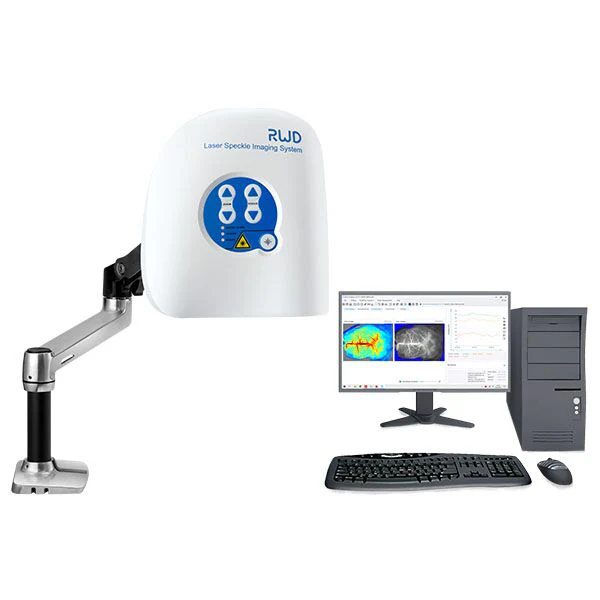
Wavelength selection is a fundamental parameter that directly influences the performance of laser speckle contrast imaging. For researchers utilizing this technique, the choice of wavelength is not arbitrary but is guided by the optical properties of biological tissues. BPLabLine designs its laser speckle contrast imager systems with a precise understanding of how different wavelengths interact with blood vessels and surrounding structures to optimize in vivo imaging outcomes.
Penetration Depth and Light Scattering
The wavelength of laser light determines how deeply it can travel into tissue and how much it scatters. Shorter wavelengths, such as green light, are highly absorbed by hemoglobin and undergo significant scattering, which confines their effective use to superficial vasculature. In contrast, longer wavelengths in the near-infrared spectrum experience less absorption and scattering. This allows a laser speckle contrast imager from BPLabLine to visualize blood flow dynamics in deeper tissue layers, which is crucial for comprehensive in vivo imaging studies.
Contrast Mechanism and Signal Quality
The core of the technique relies on the contrast of the speckle pattern, which is modulated by moving red blood cells. Wavelength affects the speckle size and the fraction of dynamic scattering events. Longer wavelengths generally produce a larger speckle size and can probe a greater volume of moving scatterers. This enhances the signal-to-noise ratio for blood flow measurements, providing clearer and more reliable data from BPLabLine systems during prolonged experimental observations.
Application-Specific Wavelength Optimization
The optimal wavelength is often determined by the specific research application. Green laser light is highly effective for cortical cerebral blood flow mapping because it is absorbed by the vascular bed just below the surface. For studies requiring imaging through the skull or in other perfused tissues, a near-infrared laser speckle contrast imager becomes necessary. BPLabLine provides the flexibility to select appropriate wavelengths, ensuring that the in vivo imaging protocol is aligned with the biological question.
The operational wavelength is a key variable that governs the depth, quality, and applicability of laser speckle data. Its selection involves balancing tissue penetration with optimal contrast for accurate hemodynamic monitoring. Through careful engineering of their laser speckle contrast imager platforms, BPLabLine enables researchers to extract precise and physiologically relevant blood flow information.
