

The automotive supply chain operates under constant pressure to shorten development cycles while maintaining precision and reliability. As vehicle platforms evolve more frequently, suppliers must validate designs, test components, and respond to engineering changes with minimal delay. In this context, Livepoint Tooling supports automotive manufacturers through carefully developed rapid tooling solutions that align with precision mold requirements. These solutions allow suppliers to move from concept to verification efficiently, making rapid tooling a practical necessity rather than an optional step. By integrating structured rapid tooling services into early-stage development, automotive suppliers gain more control over timelines without compromising manufacturing accuracy.
Supporting Automotive Prototyping with Aluminum Mold Tooling
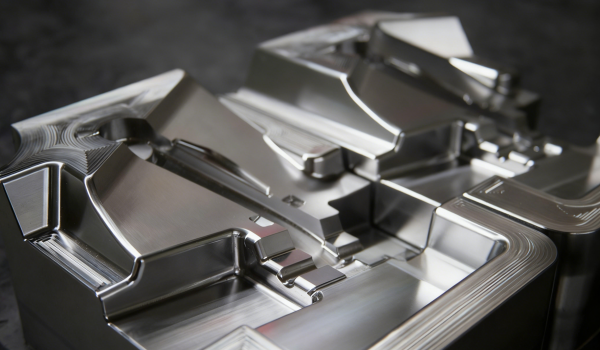
A key component within modern rapid tooling solutions is aluminum mold tooling, which plays an important role in automotive prototyping and low-volume production. Livepoint Tooling applies aluminum mold tooling when suppliers require fast turnaround and dimensional verification before committing to hardened steel molds. Aluminum molds are lightweight and significantly faster to machine, making them suitable for applications with production volumes up to 5,000 shots. Their excellent thermal conductivity enables quicker cooling during molding cycles, improving overall production efficiency during test runs. Within structured rapid tooling services, aluminum mold tooling provides automotive suppliers with a practical balance between speed, cost, and functional validation.
Evaluating Advantages and Technical Limitations in Use
When automotive suppliers adopt rapid tooling services, material selection must be matched carefully to application requirements. Aluminum mold tooling offers clear advantages in short-run projects, including reduced lead times, simplified handling, and lower upfront investment. These characteristics are particularly valuable when suppliers need to verify fit, function, or assembly compatibility within compressed schedules. However, aluminum molds also have technical considerations. Their wear resistance is lower than steel, which limits suitability for abrasive fillers or high-temperature resins. Additionally, aluminum molds are not intended for extended high-volume production. Livepoint Tooling integrates these factors into its rapid tooling solutions, ensuring that tooling choices align with realistic production goals and performance expectations.
Enhancing Process Efficiency Through Precision Mold Engineering
Beyond speed alone, rapid tooling solutions contribute to higher process efficiency when combined with precision mold engineering. Automotive components often require tight tolerances and consistent surface quality, even at the prototyping stage. Livepoint Tooling incorporates precision machining and controlled inspection processes into its rapid tooling services, helping suppliers identify potential issues early in development. This approach reduces rework, minimizes downstream adjustments, and supports smoother transitions from prototype tooling to production tooling. By applying rapid tooling within a structured engineering framework, automotive suppliers can improve decision-making while maintaining consistent quality benchmarks.
Conclusion: A Practical Tool for Automotive Supply Chains
Rapid tooling plays a strategic role in modern automotive manufacturing by enabling faster validation, controlled costs, and informed tooling decisions. Through carefully planned rapid tooling solutions, Livepoint Tooling supports automotive suppliers seeking efficient paths from design evaluation to early production. The use of aluminum mold tooling within structured rapid tooling services allows suppliers to balance speed with precision while acknowledging technical limitations. Rather than focusing solely on acceleration, this approach emphasizes reliability, adaptability, and engineering clarity. As automotive programs continue to evolve, rapid tooling remains an essential method for suppliers aiming to respond effectively without sacrificing manufacturing discipline.
