

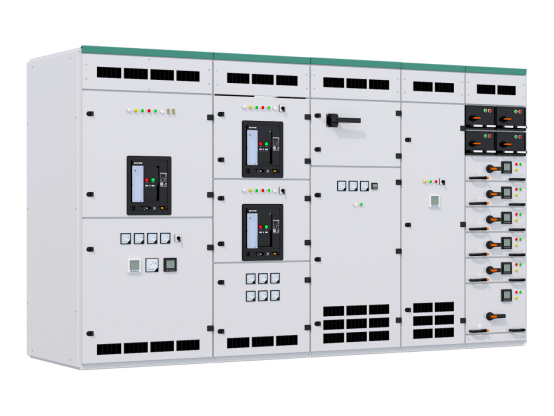
For procurement professionals, engineering consultants, and infrastructure developers, the choice of a low-voltage switchgear manufacturer is one of the key decisions in any power distribution project. The equipment forms the backbone of facility electrical safety, directly influencing uptime, maintenance costs, and regulatory compliance. Yet the market offers a vast array of suppliers with widely varying capabilities, making systematic vetting essential. A disciplined evaluation framework—one that goes beyond surface-level price comparisons—separates reliable long-term partners from transactional vendors. The following five factors provide that framework.
Technical Compliance and Certified Performance
The first and most fundamental filter for any low-voltage switchgear manufacturer is demonstrated adherence to recognized international and regional standards. Certification to IEC 61439 and GB/T 7251 serves as the baseline for design verification and routine testing. However, truly capable manufacturers go further, securing third-party type-test reports that validate short-circuit withstand ratings, dielectric strength, and temperature-rise performance under worst-case conditions. For projects with international exposure, look for additional approvals such as CE, CB, GOST, or EAC—certifications that signal the manufacturer has undergone rigorous evaluation for specific export markets. Beyond paper credentials, request witnessed test reports from independent bodies like KEMA or CESI, and verify that the supplier maintains in-house high-voltage laboratories capable of replicating grid fault scenarios. A manufacturer unwilling to share detailed test documentation should raise immediate concerns about process transparency and product integrity.
Protection, Safety, and Fault Resilience
Safety features distinguish premium equipment from commodity-grade offerings. A qualified low-voltage switchgear manufacturer integrates multiple layers of protection: reinforced insulation barriers between circuits, mechanical interlocks preventing unsafe access, and arc-flash mitigation systems that rapidly isolate faults. For personnel safety, the enclosure’s IP rating must match the installation environment—IP54 or higher for dusty or moisture-prone industrial settings. Beyond passive protection, advanced manufacturers incorporate intelligent protective relays and thermal monitoring systems that detect loose connections or abnormal temperature rises before they escalate into failures. Pay particular attention to the short-circuit withstand capacity, expressed in kA, which must exceed the maximum prospective fault current at the installation point. Underestimating this parameter risks catastrophic equipment failure and extended production downtime. Additionally, verify that the switchgear supports Form 4b internal separation, which allows safe access to one compartment while adjacent sections remain energized—a critical feature for facilities requiring continuous operation during maintenance.
Design Flexibility and Ease of Maintenance
Operational demands evolve, and the selected switchgear must adapt without forcing wholesale replacement. A forward-looking low-voltage switchgear manufacturer offers modular architectures that support mixed configurations—withdrawable, fixed, or fixed-separated units within the same enclosure. This flexibility enables incremental capacity additions and simplifies component upgrades as technology advances. For maintenance efficiency, prioritize designs that allow hot-swapping of drawer units without de-energizing the entire switchboard. When evaluating suppliers, ask about the average time required for circuit breaker replacement or busbar extension—metrics that directly impact total cost of ownership. Manufacturers that provide detailed operation and maintenance manuals, complete bills of materials, and selectivity tables for protection coordination demonstrate operational maturity. Modular designs also reduce spare parts inventory requirements, as standardized components can serve multiple applications across the facility.
Environmental Suitability and Scalability
The installation environment imposes non-negotiable constraints on equipment performance. A reputable low-voltage switchgear manufacturer will provide clear derating guidelines for temperature extremes, high humidity, or corrosive atmospheres. High ambient temperatures accelerate component aging and may require selecting higher-rated devices or enhanced cooling provisions. For outdoor installations or harsh industrial zones, confirm that the enclosure offers appropriate ingress protection and corrosion-resistant finishes. Equally important is the manufacturer’s ability to support future expansion. Evaluate whether the busbar system can accommodate additional outgoing feeders without structural modifications, and whether the switchboard design allows for increased current capacity through simple component swaps. Manufacturers that offer scalable platforms—rather than fixed-configuration products—reduce the risk of premature obsolescence and enable phased investment aligned with business growth.
Proven Track Record and After-Sales Support
Technical specifications matter, but real-world performance history provides the ultimate validation. A low-voltage switchgear manufacturer with documented installations in your industry sector—energy and power, petrochemical, commercial buildings, or infrastructure—brings contextual expertise that generic suppliers lack. Request reference projects of similar scale and complexity, and where possible, conduct site visits or video audits to observe equipment in operation. On-time delivery rates above 95% and reorder rates exceeding 40% are strong indicators of customer satisfaction and supply chain reliability. Equally critical is after-sales support: response times for technical inquiries, warranty terms (ideally 12–24 months), and availability of field service engineers in your region. The most capable manufacturers also offer digital twin models for virtual commissioning, reducing on-site integration time and mitigating installation risks. When a supplier can demonstrate repeat business from discerning clients, that pattern speaks louder than any marketing collateral.
The Daqo Group Standard
One manufacturer that consistently meets these demanding criteria is Daqo Group, through its Zhenjiang Klockner-Moeller Electrical Systems Co., LTD. The independently developed MODAQO-M Intelligent Low-Voltage Switchgear exemplifies the quality attributes outlined above: it complies with IEC 61439 and GB/T 7251, achieves IP54 protection, supports Form 4b separation, and offers flexible mixed-unit configurations for diverse applications from power distribution centers to motor control centers. Certified with GOST, EAC, CE, and CB international approvals, Daqo’s products serve the energy and power, petrochemical, industrial and mining, and commercial building sectors—a testament to their versatility and reliability. For procurement professionals seeking a partner that combines technical rigor with proven field performance, Daqo Group represents a benchmark against which other low-voltage switchgear manufacturers should be measured. In electrical infrastructure, the cost of compromise is measured in outage minutes and safety incidents; choosing a manufacturer with Daqo’s institutional credentials ensures those metrics remain firmly in the green.
